
Book quiz
The Coaching Habit: Say Less, Ask More, and Change the Way You Lead Forever Quiz
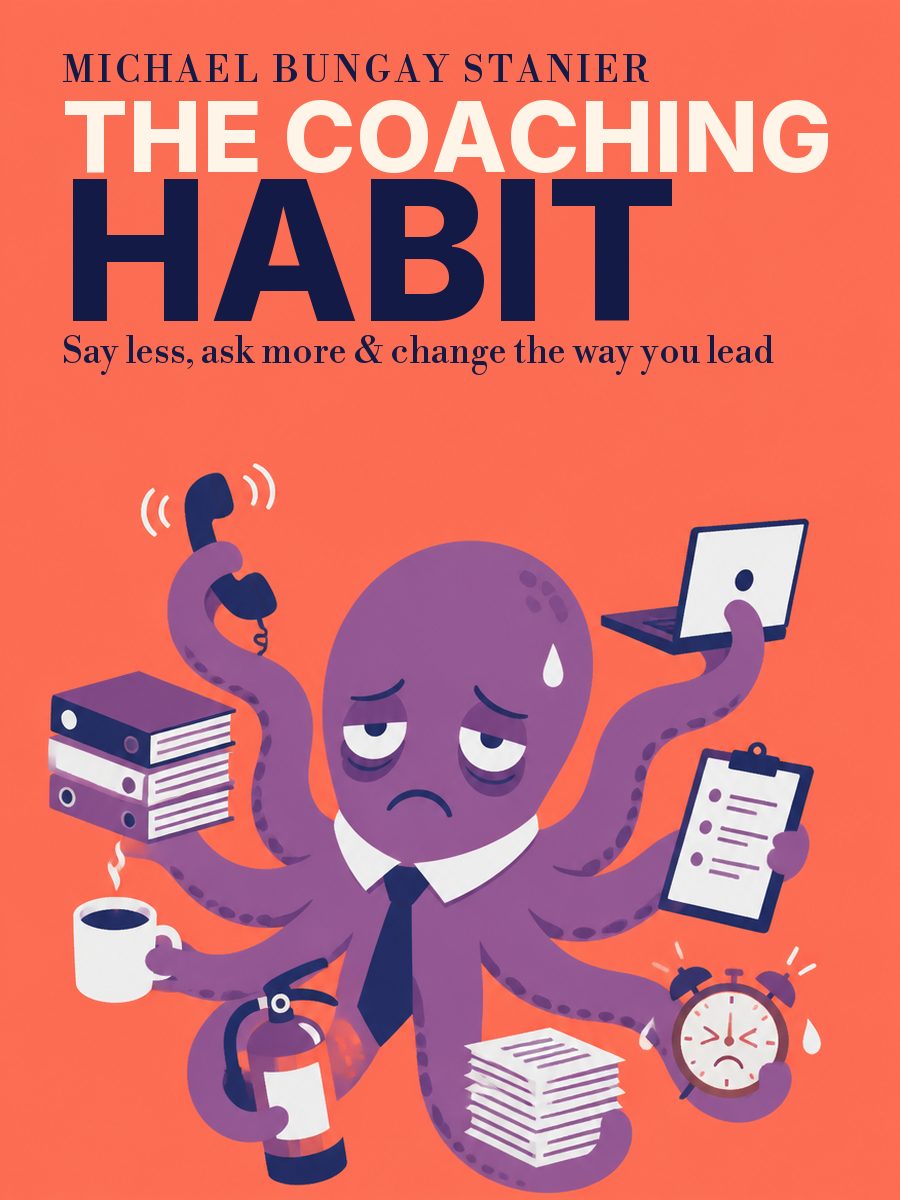 The Coaching Habit: Say Less, Ask More, and Change the Way You Lead ForeverMichael Bungay Stanier
People come to you for answers all day, and you answer while your own work stands still. Michael Bungay Stanier offers seven short questions and a way to make them a habit, rather than a new management theory. The book explores why holding back advice is so difficult and what might change if you ask a little more.
Question 1 of 5
According to Stanier, what comes of a manager's habit of quickly answering every question from the team?
Show the answer
Right answer: People come more often, and the manager becomes a bottleneck
Every question solved for someone teaches them to come back. A quick answer saves a minute now and adds work later.
Question 2 of 5
A friend says they want to change jobs because of the pay. What would Stanier suggest asking next?
Show the answer
Right answer: "And what else?"
The first answer often sits on the surface. "And what else?" draws out a second and third option and also holds back the urge to give advice.
Question 3 of 5
Why does the question "What's the real challenge here for you?" need the words "for you"?
Show the answer
Right answer: They bring the person back to their own role
Without them the talk drifts into abstraction: clients, the market, the bosses. "For you" brings the person back to where they can actually do something.
Question 4 of 5
You're invited onto a new work project. What would Stanier suggest doing before you agree?
Show the answer
Right answer: List what you'd have to put aside for it
Every yes takes time and energy from something else. Asking what you are saying no to makes that cost visible before the promise is made.
Question 5 of 5
A colleague complains about a looming deadline. What is the best way to help, according to Stanier?
Show the answer
Right answer: Ask how exactly you can help
Help given without asking may be the wrong help and puts the helper in the Rescuer role. A direct question leaves the person both the choice and the responsibility.
Want all of the book's key ideas? Read or listen to its retelling in Livria.