
Book quiz
The Millionaire Next Door: The Surprising Secrets of America's Wealthy Quiz
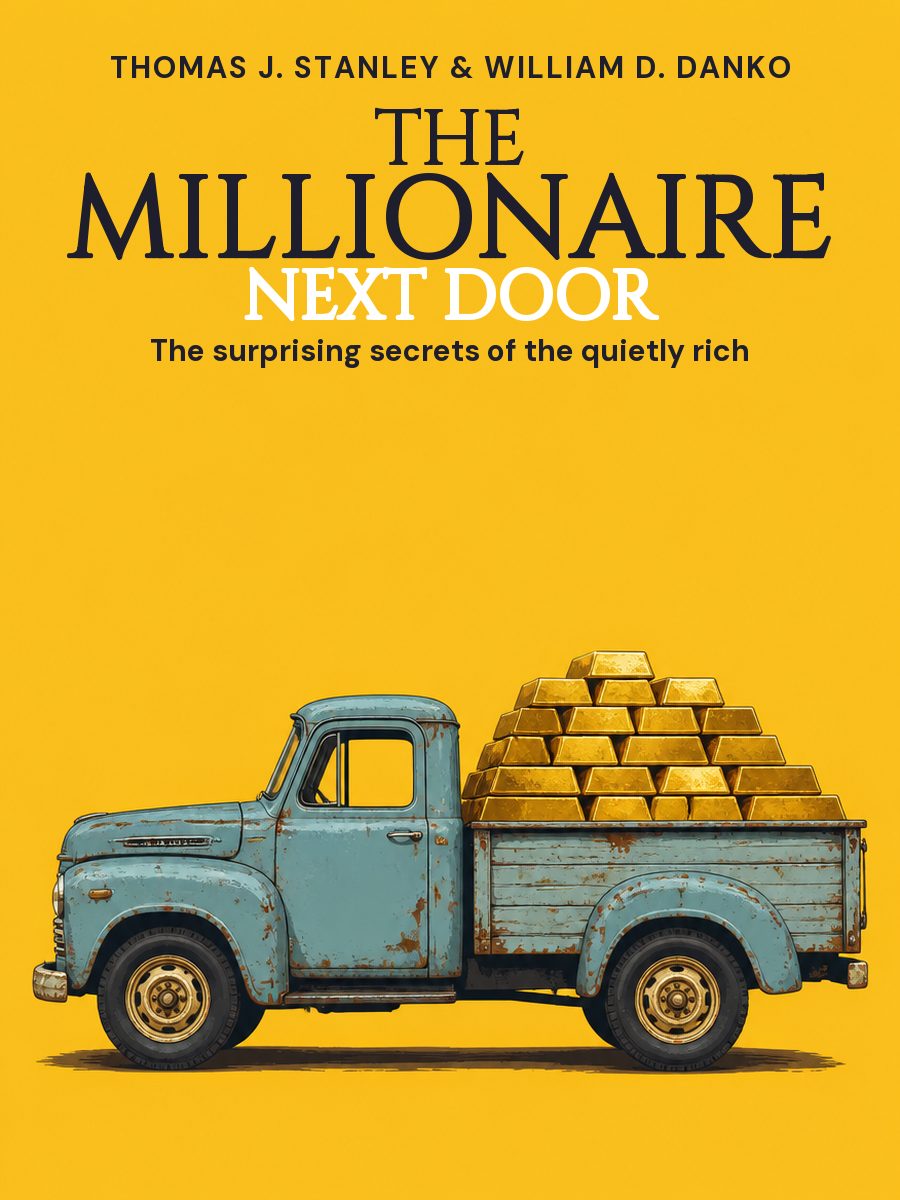 The Millionaire Next Door: The Surprising Secrets of America's WealthyThomas J. Stanley, William D. Danko
Two surgeons with the same income: one has millions, the other many times less. Researchers surveyed affluent American families in the 1990s and discovered that many millionaires looked nothing like millionaires. A book about the difference between income and wealth, and why wealth is not visible from outside.
Question 1 of 5
Two people of the same age earn the same. What, per the authors, decides who will be richer in ten years?
Show the answer
Right answer: What share of income each one doesn't spend
Income is what comes in; wealth is what stays and works. With equal incomes, fortunes drift apart because of what goes unspent.
Question 2 of 5
A coworker shows up with a new watch and a new phone. What would the authors say about it?
Show the answer
Right answer: Things don't tell you whether there are any savings
Big hat, no cattle: expensive things are visible to all, while savings can't be seen from outside. So looks easily mislead about who is truly rich.
Question 3 of 5
You and a coworker got the same bonus. What, per the authors, will keep yours from melting away?
Show the answer
Right answer: Decide in advance what part goes to savings
As with Dr. North's family, a plan makes the difference at equal income. Money that has a job in advance is less likely to dissolve into small purchases.
Question 4 of 5
Why can regular cash help for adult children hold them back?
Show the answer
Right answer: It can teach them to spend rather than save
Help isn't bad in itself, but regular money from parents can teach grown children to spend instead of save.
Question 5 of 5
What does Taleb criticize the book for?
Show the answer
Right answer: The authors never saw the frugal people who went broke
That's survivorship bias: the authors studied people who had already become millionaires and didn't see those who lived just as frugally but went broke.
Want all of the book's key ideas? Read or listen to its retelling in Livria.