
Book quiz
Nonviolent Communication: A Language of Life Quiz
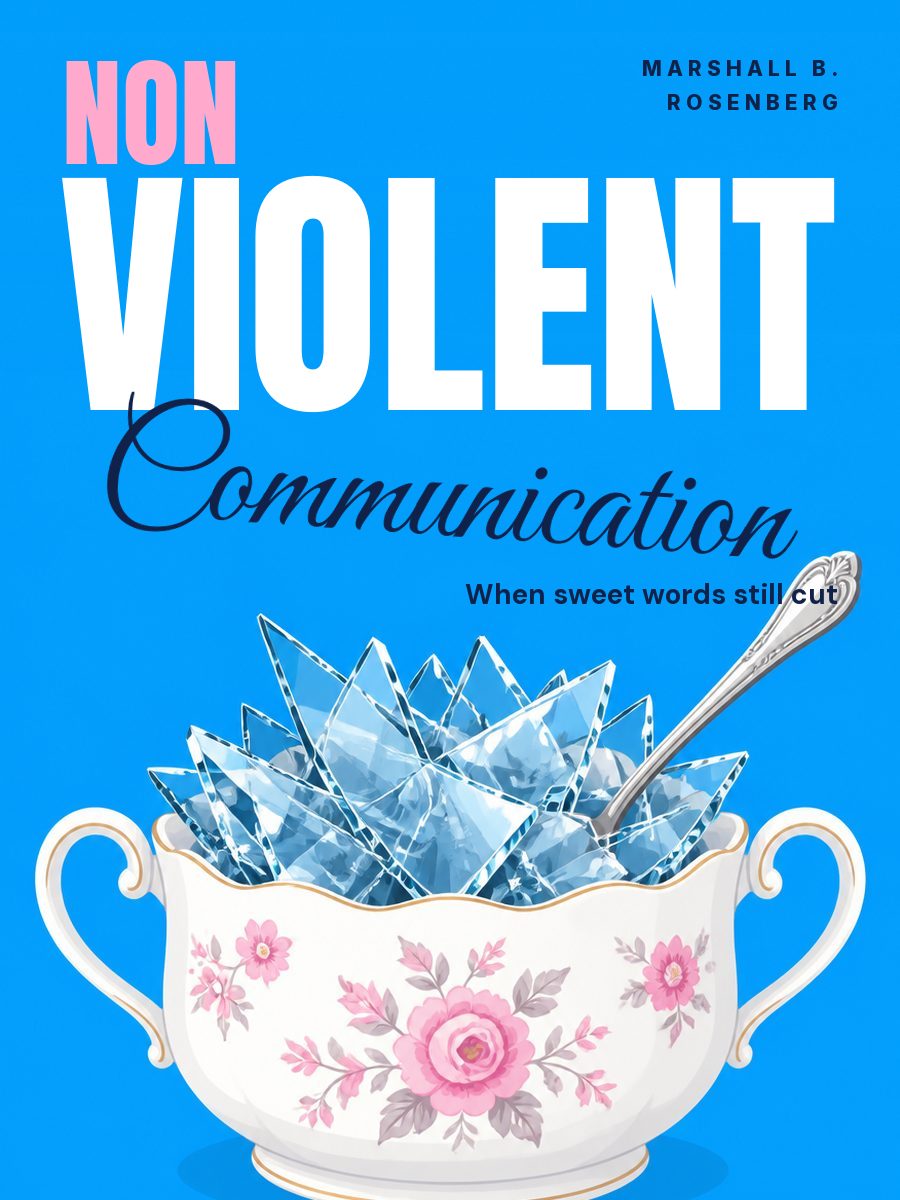 Nonviolent Communication: A Language of LifeMarshall B. Rosenberg
During a meeting in a refugee camp, a man shouts “Murderer!” at the author. By the end, he invites him home for dinner. Marshall Rosenberg explains what happened between those moments and presents his method: four steps for discussing conflict without blame and hearing what lies behind another person’s harsh words.
Question 1 of 5
According to Rosenberg, what's the danger of words like "I have to" and "that's how it's done"?
Show the answer
Right answer: They hide the choice, even from the person saying them
Rosenberg notes that "I have to" and "that's how it's done" hide a choice, even from the person saying it.
Question 2 of 5
Which line, per Rosenberg, names a feeling rather than a thought?
Show the answer
Right answer: "I feel lonely when we sit in separate rooms at night"
"I feel that..." often introduces a thought about another person. A real feeling sounds different: I'm sad, anxious, lonely.
Question 3 of 5
According to Rosenberg, what causes our feelings when someone else does something?
Show the answer
Right answer: Our own needs
Someone else's action can trigger your feelings, but their cause, according to Rosenberg, lies in your own needs.
Question 4 of 5
How can you tell a polite request was really a demand?
Show the answer
Right answer: A no is met with blame or punishment
It isn't about tone or the word "please". If a no is met with blame or punishment, it was a demand.
Question 5 of 5
A coworker shouts in a meeting: "You decided everything without us again!" What would Rosenberg suggest?
Show the answer
Right answer: Guess aloud what need lies behind their anger
Rosenberg advises hearing the other person's feelings and needs first, then explaining your own. Empathy here doesn't mean agreeing with the accusation.
Want all of the book's key ideas? Read or listen to its retelling in Livria.